Citation
Related Case Materials
Unto the Right Honourable the Lords of Council and Session, the Petition and Complaint of David Fouler, Mariner, late one of the Baillies, and as such, virtute officii, a constitutent Member of the Council of the Burgh of Kilrenny for the present Year; and James Millar, Wright, late one of the Counsellors of the said Burgh
Answers for Andrew Reid, Andrew Boyter, and Alexander Reid, Bailies of the Borough of Kilrenny, Alexander Paton, Treasurer of the said Borough, Alexander Wedderburn, Esq; William Alexander, Esq; James Edie, David Watson, Thomas Smart, George Lothian, James Boyter, William Fowler, William Brown, James Waddel, all Counsellors of the said Borough for the present Year, and John Oliphant, a Counsellor of the said Borough last year; to the Petition and Complaint of David Fowler, late one of the Bailies, and as such, virtute officii, a constituent Member of the Council of the said Borough for the present Year; and James Millar Wright, late one of the Counsellors of the said Borough
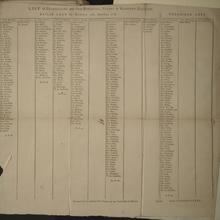
List of Counsellors and Old Burgesses, Voters at Kilrenny Election, 19 September 1765
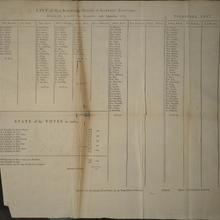
List of New Burgesses, Voters at Kilrenny Election, 19 September 1765
Respondents Proof in the Petition and Complaint, David Fowler and James Millar, against Andrew Boyter, and others, Magistrates and Counsellors of Kilrenny
Copy of the Proof Adduced for the Complainers, in the Petition and Complaint, at the Instance of David Fowler Mariner, late one of the Bailies, and, as such, virtute officii, a constituent Member of the Council of the Burgh of Kilrenny for the present Year, and James Millar Wright, late one of the Counsellors of the said Burgh, against Andrew Boyster, Andrew Reid, and others, pretended Bailies, Treasurer, and Counsellors of the said Burgh, relative to the Election of the Magistrates and Counsellors of the Burgh of Kilrenny, made at Michaelmas 1765, taken in consequence of the following Interlocutor of the Lords of Council and Session
Memorial for David Fowler and James Miller, Complainers, against Andrew Boyter and others, Respondents, Upon the Proof in the Case of the Kilrennie Election
Memorial and Abstract of the Proof for Andrew Reid, Andrew Boyter, and Alexander Reid, Bailies of the Borough of Kilrenny; Alexander Paton, Treasurer; Alexander Wedderburn, Esq; William Alexander, Esq; James Edie, David Watson, Thomas Smart, George Lothian, James Boyter, William Fouler, William Brown, and James Waddel, all Counsellors of the said Borough for the present Year, and John Oliphant a Counsellor of that Borough for last Year; against David Fouler, late one of the Bailies, and James Millar, late one of the Counsellors of the said Borough
Answers for Andrew Boyter, Andrew Reid, and Alexander Reid, Baillies of the burgh of Kilrenny; Alexander Paton, Treasurer of the said burgh; William Alexander, Esq; James Edie, Thomas Smart, James Boyter, James Waddel, Robert Anderson, Robert Alexander, Esq; David Watson, George Lothian, William Fouler, and Robert Prat, Counsellors of the said burgh of Kilrenny, elected at Michaelmas 1766; to the Petition and Complaint of David Fouler, and James Millar
Kilrenny Election. David Fowler, and James Miller Complainers, Andrew Boyter, and others, Magistrates and Counsellors of the Borough of Kilrenny, elected at Michaelmas 1765, Respondents; The Respondents Case
Answers for Andrew Boyter, and others, Magistrates and Counsellors of the Borough of Kilrenny; to The Petition of David Fowler late Bailie of Kilrenny, and James Millar late Counsellor of that Borough
Document text (uncorrected OCR)
R E S P O N D E N T S P R O O F,M I N T H E kjSS PETITIO N and COMPLAINT, D A VID FOWLER and J A M E S M IL L A R * + *.,, '— A G A I N S T A N D R E W B OYTER, and others, Magistrates; and Counsellors of Kilrenny * GA V I N H O G G, factor for Sir John Anstru-ther, depones, That he was agent for Sir John Anstruther, in the elections at Kilrenny and the other boroughs. Being interrogate, i f Sir John Anstruther, or his agents, gave any promiles to any o f the counsellors or voters in Kilrenny, or to their wives or fa- milies, to support Sir John’s interest? depones, That he never knew of any thing given by Sir John, or any orders for giving any thing; but that this deponent, before Sir John Anstruther came from London, about the 1 1 t h of September, gave to Thomas Smart’s wife L. 10 Sterling as a present; but that he did not delire her to folicit her husband for his intereft in Sir John's favours, at that time. Depones, That, perhaps, he asked her afterwards, but not when he gave her the L. 10. Depones, That Mrs Smart objected to taking the L. 10 from the deponent; but he insisted for her doing so, as a present from him, on ac count of the scarcity o f the times, which he had heard her A a complaining 1 complaining of. And being interrogate, I f he expected to be repaid this sum? depones, That he asked Mr Robert Fall it he should give the above sum to Mrs Smart, as he had heard from her brother-in-law that she was in strait- ened circumstances; and that Mr Fall ordered him to give her the said sum, and that Mr Fall has since repaid him the money, at settling accompts with him. De pones, That before he gave this money to Mrs Smart, he had a conversation with Mr Fall, about Sir John Anstruther’s standing candidate for these boroughs. Depones,That the im port of the conversation with Mrs Smart, before giving her the L. 10, was, that her husband should not engage himself before the next Michaelmas election. Depones, That when he gave the L. 10 to Mrs Smart, he had no view to the ensu- ing elections; but that he gave it out of charity, and because 1 Mr Fall desired him. Depones, That he has been authori- sed by Sir John to give such sums in charity, as L. 4 or L. 5 a-year, to different persons, but never so much as L. 10 at any particular time; and that these were poor people who never had been servants o f Sir John’s; and that he has au- thorised the deponent to give larger sums to his relations. Depones, That he does not know whether Sir John was acquainted with Thomas Smart or not; but that he had two brothers who were Sir John’s tenants; and that Sir John was well acquainted with her (Mrs Smart’s) father. Depones, t hat Mr. Fall asked him, when he acquainted him of his having given the L. 10, I f Mr Smart was to de- clare himself before the Michaelmas elections? to which the deponent answered, He thought not, as Mr Smart, and all the rest, had resolved not to declare any sooner. De pones, That before he had Mr Fall’s orders to give the L. 10, he knew, and he believes Mr Fall also knew, that Smart was a counsellor. Depones, When M r Fall paid him this L. 10, it was not in settling accompts relating to the elections, for that these accompts are not yet settled with Mr Fall, And being interrogate Whether he had given given any money to any other person in the tow n, of Ki lrenny? depones, He had not. And being further interrogate, Whether he knows or heard of any mo ney, or other reward, or promises being given by Sir John, or any of his agents in the town of Kilrenny, on account of the elections? depones, He does not, nor heard of any, excepting that he has been informed, that Mr Fall has given some money to Mrs Boyter. And be- ing interrogate, I f he knew that David Smart had any pro- mise of a new tack of his present farm, or of any other lands from Sir John, in case he should procure his brother, Thomas, to vote for Sir John's interest at the elections? depones, He does not know, and is certain, that he could have no expectations of his present farm, as it was at that time set to another, and had no reason to expect another farm. Being interrogate, I f he knows of any intention there was to carry off Bailie Boyter, or any other of the counsel? depones, That there was none by S ir John' s par- ty; but that on the Saturday, as he thinks, after Sir John's arrival, he had a meeting with the council, where the deponent was present; from which meeting four or five of the counsellors were called out, one by one, the names of whom, to the best of the deponent’s remembrance, were, Smart, Watson, Brown, Paton, and William Fou ler: That there was a croud of people at the foot of the stair, among whom were Mess. Ogilvie and Borth- wick, with sticks in their hands; and that he knows no other way the sticks were used, than Mr Borthwick’s striking Bailie Fouler's dog: That after the counsellors were thus called out, they went to a cellar below, where Sir John was, and where the deponent saw them; and that from thence they went to Mrs Reid' s, where they staid a day or two, and afterwards, as he heard, went, to Mr Alexander’s, and staid till the day of the election And being interrogate, I f he was with Lady Anstruther, 9 when when she went to Rebecca Thomson’s house, and sent for Mrs Boyter? and whether Lady Anstruther was dressed as she used to be? depones, That he was with Lady Anstru ther at that time; and that she was not in her ordinary dress, having on a blue-cloath cloak, such as is wore by country-girls. Depones, That he does not know the rea- son of the lady’s being in that dress. Depones, That he sent Rebecca’s servant for Mrs Boyter, at Lady Anstruther’s desire; and when Mrs Boyter came, the deponent went into a closet adjoining, by Lady Anstruther’s desiring him to go to another room. Depones, That he overheard no-- thing particular that passed betwixt Lady Anstruther and Mrs Boyter, that the deponent could make sense. of. De pones, That Lady Anstruther did not tell the deponent o f any promises or offers she had made to Mrs Boyter'; but that Lady Anstruther told the deponent, that Mrs Boyter had promised to bring her husband to speak to her lady- ship that evening. And being interrogate for the com- plainers, depones, That sometime after the last Michael mas elections, the deponent asked Mr Smart to be for Sir John; and Mr Smart said he could not, as he had signed a writing, with the majority of the counsellors, to support Mr Alexander’s interest. And being interrogate, Whether he had any conversation with Rebecca Thomson relating to these elections, and particularly with regard to her son James Adie, and what reason had brought him to Kilrenny, and what wages he had, and from whom? depones, He had frequent conversations with Rebecca; and that the deponent was told by her, that Mrs Reid had sent a boat over to North- Berwick for her son James Adie. And depones, when the deponent asked Rebecca, I f her son had wages from Mr A- lexander? she answered, It was natural to think so. And being interrogate, Whether he had any conversation with Rebecca, with regard to Bailie Boyter? and what the same was? was? depones, That Mrs Rebecca told the deponent,Mrs Reid had laid down forty or fifty pounds in Rebecca's house to Mrs Boyter, in order to make her use her influence with her husband to befriend Mr Alexander: That Mrs Reid sent three several messages for Mr Boyter, to come and speak to Mr Alexander, before he came; but the deponent got no direct answer whether he came or not. And being inter gate, I f it consi st s with his knowledge, that any other of fers, promises, or bribes, was given to any other persons, to espouse Mr Alexander’s interest? depones, It does not: But depones, that he has heard by report in the town, that Alexander Paton and William Fouler were to have what loss they sustained, by their lands being taken from them, made up; and that he heard this, in particular, from A- lexander Gardiner and David Auchinleck. And being in terrogate for the respondents, depones, That he was em ployed by the complainers to collect materials to found this complaint. Caus a Scientiae patet, & c. Sir John Anstruther of that Ilk, Baronet, being inter rogate, I f he had any acquaintance with the present coun- sellors of Kilrenny previous to the elections? depones, That he was acquainted with some of them several years ago at former elections. Being interrogate, If he brought with him from London letters to any o f the commissioners of the customs or excise? depones, h e did not. And being, interrogate, Whether he knows that letters were sent from any person or persons in London, to any of the commis- sioners of the customs or excise, respecting the elections in question? [Upon stating of which question, the respond ents were required to condescend and say, whether they restricted their question to what was properly the subject o f this proof, v iz. the election of the borough of Kilrenny: To which it was answered. That i f there was any letters that were wrote with a view to influence the elections in the B five five boroughs in general, the borough o f Kilrenny being one o f them, it comes immediately to affect the present question.] depones, That he believes there was one letter sent, from a private gentleman in London, to one of the commissioners o f the customs in Scotland, but does not know whether that letter respected the elections or not; but that the deponent knows o f no letter from any o f the mi- nistry, that is, from any people in power. Depones, That he never shewed to any of the commissioners of the customs or excife, any letter that was wrote to him respecting these elections. And being interrogate, Whether he wrote, or caused write, applied, or caused apply, to any o f the com m issioners of excise or customs, to use their influence with the inferior officers o f the revenue, to exerce themselves on Sir John's behalf in the elections? depones, That, so far as he can recollect, he applied to one o f the commissioners o f excise for a letter to a man, whose name is O liph an t at that time an officer of excise at Kilrenny, who, he was in formed, would be useful to him in writing, and in pointing out people whom it might be proper for the deponent to apply to, as he did not know the names of the counsellors at that time. And depones, That, so far as he can recollect, he did not know at that time that Oliphant was himself a counsellor, and thinks he did not learn this till the depo nent came to Anstruther. And depones, That his reason for believing that he did not know that Oliphant was a coun- sellor at that time, is, that he remembers to have been an gry with Mr Fall, or his factor Mr Hogg, for not having acquainted him of the names of the counsellors, as he had wrote to them from London to do. And being interro gate, I f when he applied, as above, he got the letter from the commissioner? depones, That he either got it, or it was sent him. And depones, t hat so far as the deponent can recollect, this was the only instance in which he ap plied or got such letters from any of the commission- ers ers, nor does he know of any other application made for him to the commissioners, with respect to any of the officers of the revenue in this borough. And being inter rogate. If he saw the letter before he delivered it to Mr O- liphant? depones, He read i t; but does not recollect whe ther the letter was left open for him or not; neither does he recollect:, whether or not he delivered the letter himself, or sent it to Mr Oliphant. And being interrogate, Whe ther he knows of any answer being made by Oliphant to this letter? depones, 'He knows there was an answer. And depones, That Oliphant either sent the answer to the depo nent, or shewed it to him. And being shown the print- ed answers to the complaint, and the letters therein in— grossed, depones, That he thinks these letters pretty much of the same tenor with the letters above mentioned, but cannot recollect, at the distance of four months, the pre— cise words of letters, which, at that time, he thought so in significant. And depones, That this answer of Oliphant was left with the deponent, and forwarded by him to E- dinburgh, to be delivered to the person to whom it was directed. And being interrogate, depones, That he does not know of any threats being used with Oliphant, to in duce him to promote his interest; neither does he recol lect of any application being made to the commission- ■ ers, to call away Oliphant from the borough at the time of the elections. And depones, That he was acquainted with this commissioner many years ago, when he was an officer in the army, but has not seen him since the above answer was sent him by Oliphant; and that he was not in company with the said commissioner for many years before the above-mentioned application. And de < pones, That about the time of the elections of the ma- gistrates of Kilrenny, the said Mr Oliphant came to the deponent, and informed him, that he (Oliphant) was called over to attend the commissioners at Edinburgh immediate- ly ly, and asked the deponent for him to apply to get leave tor him to stay. And depones, That having thought this application strange, he probably told Oliphant, that the commisioners knew their own business best, and the de ponent had no time to make application for him, and de clined to do it. And depones, That he heard Mr Oli phant left the place, and was not present at the election o f the magistrates. Depones, That at the time Oliphant de- sired Sir John to apply for leave to stay, it is probable Oli phant told the deponent, he was to be against him. De pones, That he knows one James Waddle in Kilrenny, but does not know of any threatenings or insinuations made to him about the loss of his office, i f he did not e- spouse Sir John’s interest. Depones, That Mr Beaton of Balfour, as the deponent has heard, threatened some of his tenants, i f they did not befriend Colonel Scott; but does not know of any threats made to tenants, in case they should not espouse the interest of the deponent. Depones, t hat he and Colonel Scott joined interests after the election of the magistrates; but does not recollect i f it was after the elections or not. And depones, That it was Some time after the election in Anstruther-Easter, that he and Colonel Scott joined interests. Depones, That he cannot condescend upon the particular time posterior to the elec tion of Anstruther-Easter, when this happened. Depones t hat he does not know of any friends of Colonel Scott’s in the town of Kilrenny, that joined him (the deponent) before the election of that borough: That James Millar one of the complainers, joined the deponent, but he look ed upon him as his own friend, but did not know that he was Colonel Scott’s friend. Depones, He cannot recollect: whether or not he knew Millar was Mr Beaton’s factor in Kil renny, at the time of the election, but knows now that he is. Depones, That the deponent might have said, in different companies, that he thought he had the disposal o f several- offices, offices, but cannot recollect positively, when or where he said so, but cannot say positively whether he said so or not Depones, That he does not recollect of having wrote to any person that he had the disposal o f such offices. Depones That he knows Bailie Fouler; but did not know him per- sonally, though he might have seen him accidentally a- mongst the fi shers, previous to his coming down as a candidate for the dist r ict. Depones, That he was told Bailie Fouler had joined his interest before the Michael mas elections. Depones, That Bailie Fouler has a tides- man's place, and the deponent used his interest to get it him; and that he got it after the last Michaelmas elections; and that the deponents motive for using his interest to get this office, was his friendship to the man. Depones, That he does not recollect to have had any conversation with any person, previous to the Michaelmas elections, a- bout getting Bailie Fouler this place, or any other. De pones, That he does not know of any promise or offer made to Bailie Brown, or any of his family, by the depo nent, or any of his friends, to support him at the ensuing elections. Depones, That he was told, that a number of burgesses were made on the day preceding, and also the day of the poll for the magistrates, on both sides. Depones, That he was present at the poll; and that he was some- time in the room where the pollers were, which is an out er place, railed off from where the council sit. Depones, That he cannot recoiled if he saw money laid down upon the table; but that he heard Mr Alexander, and some o- thers, taking protest s about tickets being paid for by o- thers than the voters, or the tickets being given them by-others. Depones, That Alexander Fall, carpenter, was very active to assist the deponent in these elections. De pones, That the deponent certainly, had conversations with Mr Fall about the present elections. Depones, That he never heard or knew of Mr Alexander Fall havin C ma made any offers to Alexander Paton, or his wife, till such time as he saw it in the printed answers to this complaint; and that he never heard from Mr Fall, that he had made offers to any person whatever. Depones, t hat he heard of a lady’s being dressed in a cloath-cloke, instead of a s ilk one, sometime after it happened: That the lady went in that dress to the house of Rebecca T homson, where, to the best of the deponent’s remembrance, he was told she saw Bailie Boyter’s wife; but does not recollect, though he might have heard, what particulars might have passed on that occasion. Depones, t hat he neither knows nor heard of any money being given or offered by Robert Fall to Mrs Boyter, till very lately, and after the date of the printed papers; and that Mr Fall informed him, since he came to town, that he had given ten pounds, or some such sum, to Mrs Boyter, who was an old servant of his. father's. Depones, That Lady Anstruther, previous to the Michaelmas election, had a meeting in the house of the Reverend Mr Waddle, with all or most of the counsellors wives. And being interrogate, If he knows any of the particulars, or substance of what passed at that meeting? depones, That, at this distance o f time, the deponent cannot recollect the substance, or any of the particulars, of what passed at that meeting, only that one of the counsel- lor’s wives s ent from that meeting for her husband; and believes that Lady Anstruther supped at Mr Waddle’s with the counsellors wives. And being interrogate, If, at the time of the complaint, or since that period, he sent Mr Hogg with any message to Mrs Smart, importing, that she might keep what money she had got from said Gavin Hogg; and i f she did him (the deponent) no good, she would do him no harm? depones, That he does not recol- lect to have sent Mr Hogg any such message; and that, with regard to the money, it was but lately since he heard of that, and could not before that time send any such message. message. And depones, That neither could he send Mr. Hogg to Mrs. Smart, to desire her, if she did the depo- nent no good, she should do him no harm; and the deponent never heard that Gavin Hogg carried any such a message to her. Depones, That he has been at some expence in the town of Kilrenny, in drinking and en- tertaining; and that these expences were sometimes paid out by Mr. Robert Fall and Mr. hogg, and sometimes by others. Upon reading over the oath, the deponent ob- serves, that the letter from London, is said to be sent to one of the commissioners of the customs, is a mistake; for that that letter was neither sent nor directed to a com- missioner of the customs, but to a private gentleman. And being further interrogate, If the deponent knows, or has heard of any money being offered or given, or any reward promised to any person whatever, to induce them to promote his interest at these elections? depones, He knows of none, excepting the two sums above deponed to, said to be given by Mr. Hogg and Mr. Robert Fall; and the deponent does not think was given for the purpose contained in the interrogatory. Being interrogate, If he ever had any letter directed to himself, from any person in power at London, respecting this election? depones negative. Causa scientiae patet. Mrs. Janet Fall, (Lady Anstruther), depones, That the deponent never cultivated any acquaintance with the Counsellors of Kilrenny, or their wives, previous to the 30th day of September last; nor ever saw any of them o- therwise than accidentally; and that she never knew them. Depones, That the deponent now knows Bailie Fouler, and that she wished Sir John would use his interest to procure him a tide-waiter's place, at that time vacant; and, to the best of the deponent's remembrance, thinks, that that the commencement of her acquaintance with Bailie Fouler, was a day or two before the day o f the election of the magistrates o f Kilrenny. Depones, That Bailie Fou ler called the deponent to another room, told her, he was sorry the council had all left her, and declared for Mr Alexander; but that he himself made her a compliment o f his vote, which was now of little consequence: The de ponent received it kindly, and said, That she would do all that she possibly could to serve him, and that he might depend on her constant endeavours to do so. Depones, That upon such an expression o f kindness, the deponent was somewhat astonished, as she was then unacquainted with Bailie Fou ler, and was even in some doubts whether he was sincere in these declarations; but was soon relieved out of those doubts, by Bailie Fouler declaring, That he did this on account of the obligations he thought he lay under to the deponent’s brother, who had long employed him in the way of his bu- siness. Depones, That upon this occasion, she gave Bailie Fouler five guineas, as he was going out of the door, desi ring him to make a gaudiamus with his friends, and drink the deponent’s health. Depones, That, at this time, there was no mention made o f any poll to Bailie Fouler. De pones, That she remembers to have supped at Mr Waddle, the minister’s, with a considerable number of the counsel- lor's wives at Kilrenny. Depones, That she cannot now remember what general conversation might have passed at supper upon that occasion; but she does remember the particu lar conversation that passed with Mrs Smart, who she believes to be the wife of a tailor. Depones, That she said to Mrs Smart, that of all the people engaged against Sir John An- struther, she was surprised at none so much as her husband, because Sir John, from his connections in the country, had it more in his power to be of use to her husband than any other person had. Depones, That she likewise said, that she thought Sir John was both as able and willing willing to serve Mr Smart as Mr Alexander was; and there fore she begged to know what Mr Alexander had done for him on this occasion. Depones, That she said to Mrs Smart, that she (the deponent) could employ her husband in the way of his business, and, the deponent thought, it lay out of Mr Alexander’s way to serve him. And being interrogate, Whether she said to Mrs Smart, that she would give more, or do more than Mr Alexander? depones, That, to the best o f the deponent’s remembrance, Mrs Smart did not tell her that Mr Alexander had given her any thing. And depones, That she neither did offer any thing, nor meant to offer any thing, but only wanted, by this conver- sation, to draw out what she supposed Mr Alexander had gi- ven. Being interrogate, If she knew of any offers being made to Mrs Adie, in order to influence her husband’s vote at the election? depones, That in presence of Mrs Nairn, wife to the minister of Easter-Anstruther, she did speak to Mrs Adie, and urged to her the folly of her husband’s pre ferring a stranger to Sir John Anstruther. Depones, That she likewise urged her, to know what she had received from Mr Alexander; because, whatever Mr Alexander had done for her, or could do for her, the deponent was certain Sir John would do more. Depones, That she herself remembers nothing being specified on that occasion, but has some re- membrance, that Mrs Nairn told the deponent, that she was piqued that the deponent did not support her upon that oc- casion, when Mrs Nairn talked something about a carpen ter of a ship, the particulars of which the deponent cannot remember. And being interrogate, Whether she had any con- versation with Mrs Boyter in Mr Waddle the minister’s? and what this conversation was? depones, That when drinking tea, Mrs Boyter said a great deal about the obligations she lay under to the deponent’s father and brother: t hat she had been long a servant,and spoke with particular warmth of the services the deponent’s father had done her, having been his D servant servant for five years and a half. Depones, That upon this the deponent carried Mrs Boyter to another room, where she had a good deal of conversation with her, and, in particular, she asked her, By what means her husband had been induced to join against Sir John Anstruther, after all she (Mrs Boyter) had said of her obligations to the deponent’s father? depones, That she represented to her the folly o f Mr Boyter preferring a stranger to Sir John Anstruther, especially after he had gi ven his hand to Mr Robert Fall to the contrary. Depones, That Mrs Boyter said she had got nothing from Mr Alex ander; that her husband did this for the good o f the town. Depones, That the deponent said to Mrs Boyter, she must be very public-spirited to do so much for the good o f the town, in forgetting former obligations, and running so great a risk, as preferring a stranger to Sir John Anstruther. De pones, That the deponent thought she made some impres- sion upon her: That Mrs Boyter said, she could make nothing o f her husband, as when she saw him he was generally drunk, and was that night drinking with the council, where Sir John Anstruther was; but, she believed, i f she could get him just now, what the deponent said might make some impression upon him. Depones, That the deponent ac cordingly sent to the council for Mr Boyter, but he did not come, because, as the deponent was informed, he was carried off by some of Mr Alexander’s friends; and imme diately after Mrs Boyter was called out and left Mr Wad dle’s. Depones, That in the above conversation with Mrs Boyter, when the deponent asked Mrs Boyter, I f she had got any money? Mrs Boyter said, She had never seen their coin, but only five guineas from the deponent’s brother, Mr Robert Fall. Depones, That upon mentioning this afterwards to her brother, he said, W hat! is she begun to falsify already? for I gave her ten guineas of my own money, not of Sir John’s. Depones, t hat, in this conversation, the depo nent farther represented to Mrs Boyter, that, at any rate, Mr Alexander’s interest would end with his own life;. whereas whereas Sir John Anstruther always had, and always would support his friends; and i f any thing was to ail Sir John himself, he had a son who would likeways think it his duty to support those who supported his father’s interest. Depones, That she (the deponent) further said, As Sir John always took care of his friends, and (she Mrs Boyter) was now old, she might depend upon Sir John’s support, when she and her husband was unable to work. And being in terrogate, Whether the deponent went to the house of Re becca Thomson? and whether the deponent was at that time dressed in a manner different from what she usually goes in? depones, That she was at the house of Rebecca Thomson: That she had on a calico nightgown: That she had on a black silk cap, a lawn apron, a blue cloath cloke belonging to one of the servant-maids. Depones, That her reason of wearing this dress was, that she knew none o f the counsellors wives would have come and spoke to her i f she was known, which she would immediately have been, i f she had gone into the town in her usual dress; and likewise, that the children are very troublesome, following her on the streets, when she had occasion to go to town. Depones, That her going to town in this dress, was after the Michaelmas elections; and her reason for going, was to learn from Mrs Boyter, what she or her husband had re ceived from Mr Alexander. Depones, That upon this second meeting with Mrs Boyter, whom she had sent for to the house o f Rebecca Thomson, she pressed her again very warmly, and urged the same reasons as formerly; and likewise added, You see Sir John has the court—interest, and who is made the collector; and you do not know what might have been done for you, if you had been Sir John's friend. Depones, That in answer to this, Mrs Boyter made the same answer as formerly, that she had never seen their coin; and thinks she mentioned the five guineas; she got from Mr Fall also. Being interrogate, I f the de- ponent nonent had, at any time, a convention with George Lo thian? depones, That about a day or two before the Mi chaelmas elections, she had a conversation with George Lothian. Depones, That this conversation was occasioned by Mr Lothian’s coming to the deponent to learn from her whether Mr Wedderburn was to stand, because if he was not to stand, he (Mr Lothian) had engaged to Mr Ro bert Fall to be in his interest. Depones, t hat she solicit Mr Lothian warmly to be for Sir John, because her bro ther had spoke to him before Mr Wedderburn came down. Depones, That Mr Lothian told the deponent, he could not be against Mr Wedderburn, as he was brought into the council on purpose to serve him. Depones, That she in formed Mr Lothian, that as Sir John had the court-interest, the deponent might have it in her power to serve him more than Mr Wedderburn could do; and that she would use her endeavours to provide for him, i f he would not be transferred, but keep his promise to her brother; upon which Mr Lothian gave the deponent his hand, and said he would not be transferred. Depones, That she used various other arguments; and, in particular, she makes no doubt that she would insist upon the means in her power to serve him, by her brother Mr Fall employing him in the sea-faring w ay; and likewise believes, she mentioned his father’s former connections having been friends to Sir John. Being interrogate, Whether or not she knows, or has heard of any sum of money, or reward given or promised by Sir John Anstruther, or any of his agents, to any person in Kilrenny, on account of the election in question? de pones negative. And being interrogate, How the deponent came to know that Sir John had the court-interest? depones, That a gentleman in London, who had access to know, came to Sir John Anstruther's house in London; and the depo nent heard him say, that if Sir John chused to stand for th ese boroughs, he made no doubt, he would have the as- sistance sistance of the minist r y; and she likewise had occasion to know, that when application was made on behalf of other two gentlemen, they were resisted. Causa Scientiae patet, &c. ^- f / John Anders on, sailor in Cellardyke, depones, That he never knew either Mr Robert or William Alexanders before the last Michaelmas election, but has heard of them. De pones, That most of the fishers in Cellardyke voted for Mr Alexander, at last Michaelmas elections, and many of them got burgess-tickets from him or his agents. Depones, That he has heard of a cable or junk being given to the fishers at Cellardyke for the mooring of their boats; and that the deponent saw, in the hands of Robert Anderson, a note which he had received from Mr Martin or Mr Ogilvie, impowering him to receive the junk at Leith; and the de ponent knows the cable was brought to Cellardyke. De pones, That he never heard of any objection being made to Bailie Fouler mooring his boats upon this junk, or any other person, except one time, when Bailie Boyter was late in coming in from the fishing, and after the other boats were all moored, at which time he seemed displeased with the brother of the deponent, who had three boats upon the junk, when Bailie Boyter could not get a birth. De pones, That he heard all this from his brother; as also, that Bailie Boyter i s reason for being displeased for not get ting a birth for his boats was, that he had a better right, because he was Mr Alexander’s friend, and they were not. Depones, That he knows Mrs Reid, who has been a friend o f Mr Alexander’s, as far as she could; and that she was active, as far as the deponent saw or heard, in going a- bout soliciting the counsellors, Depones, hat he has heard from Bailie Boyter’s wife, that Mrs Reid had made offers to her, Mrs Boyter, of £ 5 0 o r £ 6 0 if her husband would be of Mr Alexander’s interest; and that this offer was made, as the deponent knows, before Bailie Boyter de- E. clared clared for Mr Alexander. Depones, That the deponent upon another occasion, asked James Boyter, How his navi gation was going on, which he had been put to by Mr Alexander; at which time he told the deponent, who had also asked him, How the elections were going on? that he did not know how the elections would go, but that his father had good offers made him by Mr Alexander; and the deponent was also told by his mother-in-law, Helen A die, sister to Mrs Boyter, of this sum’s being offered b y Mrs Reid to M rs Boyter, and that she told this to the de ponent several times, from the time the offer had been made. Depones, That Helen Adie told him, That her sister Mrs Boyter gave her this information. Depones, That he never heard that this sum was consigned in any person’s hands, For the behoof of Mrs Boyter. Depones, That he knows Bailie Boyter was in very mean circumstances be- fore the election, but since that time has been in better, and able to get any thing that people commonly want in their situation, which they had not before; and the de ponent had access to know this, from his having had cor respondence with Mrs Boyter, both before and after the Michaelmas election. And being interrogate, What was the common report or belief of the people in town, whether Bailie Boyter had accepted of or got a sum of money on this occasion, for his vote? depones, That i f he was to tell all the reports he heard, it would consume a whole day; and that the common report was, that the whole coun- sellors had got money, to support Mr Alexander’s interest. Depones, That he has heard that Mr Ogilvie had made offers to Bailie Fouler, which Mrs Reid was to fu lfil: That the deponent was told this by Bailie Fouler himse l f; and that the sum offered was L. and And depones, That this offer was before the declaration in favours o f Mr Alex ander, the deponent having been told so before that time. Depones, That Mrs Reid has done a great deal o f good to to David Watson and his family, both before and after the elections, and before there was any word of Mr Alex ander; and that the deponent was told this by David Wat son counsellor himself; and that Mrs Reid had put out his child to nurse, and paid for it so much a quarter, and that this child was put out to nurse before there was any word of Mr Alexander. And depones, That he has heard from the said David Watson, of his having got money from Mrs Reid, to the extent of two or three shillings at a time, as he needed i t; and that she did this both before and after there was any word of Mr Alexander; and that she did this as she came along at times; and that the man stood of need of such assistance, as he was a fisherman, with a family and eight children. Depones, That he has heard from Andrew Taylor, and others, that the said Mrs Reid, as she was distributing money amongst the poor of the town, of which he was one, gave him two shillings. Depones, That he knows a boat was sent to North-Berwick for James Adie counsellor, by Mrs Reid, before the last Michaelmas elections: That after he came, he remained there two months. Depones, That he had never any par ticular conversation with James Adie himself, but has heard it reported, that he got wages from Mr Alexander, at the rate of two shillings a-day. And being interrogated for the respondents, depones, That Mrs Boyter never told the deponent, that she had accepted of the sum offer ed her bv Mrs Reid, or that her husband had joined Mr Alexander on that account. Depones, That at the time he heard of the offer being made to Mrs Boyter, he knows her husband, if he had joined Mr Alexander, had not de clared so. Depones, That he has heard from Mrs Boyter’s sister and her nephew, that Mrs Boyter had received L. 10 from Mr Robert Fall, upon her complaining that the times were bad. Depones, That Mrs Reid, before Sir Henry Erskine died, and upon the death of David Watson's wife, which which is about a twelvemonth ago, took care of the child, and put it out to nurse. And depones, That he never heard of Mrs Reid’s giving any money to the poor people in town, till the time of these elections, except to David Watson, as above. Caus cientp &c. George Burges, E sq; one of the commissioners of his Majesty ’s excise in Scotland, being interrogate and shown the copy of the letter, said, in the answers, to be wrote to John Oliphant, excise-officer in Anstruther, dated the 12th September last, as ingrossed in the act and commission, de pones, That he (the deponent) wrote to Oliphant a letter, o f the date and of the tenor, as he thinks, now shown to h im: And being also shown the answer ingrossed in the act, as from Oliphant, to the said letter, depones, That he thinks it is of the same tenor with that which he recei- ved from Oliphant. Depones, That, to the best of his memory and belief, he had no information from Sir John Anstruther, either in the way of correspondence, or other- wise, that the election of the magistrates and council of Kilrenny was to be held upon the 19th of September last: That the deponent, from the time of writing, the foresaid letter, did not see Sir John, nor had he any intercourse with him, by correspondence or otherwise, on the subject of the elections. And being interrogated, If, upon the 1 6th of September last, the board of excise, upon the deponent’s motion, issued an order, requiring Oliphant to attend the board at Edinburgh, on Wednesday the 1 8th, at 1o o’clock? To this the deponent answers, That, for any action he has done as an individual, he is ready to answer; but for what he has done as a commissioner of excise, sitting in the office of excise, and acting under authority of his commis— sion, he holds himself to be only responsible to his Ma- jesty, the parliament, and the Lords of the Treasury; and therefore begs leave to decline giving any answer to this question. question, till he can ask the advice of the crown-lawyers. And being interrogate, I f he was informed by any person of the day to which the election of Kilrenny was fixed? depones, That he cannot remember whether he was or not; that posi b l y he may have heard of it; but not thinking that he was to be called upon in this mat ter, cannot charge his memory whether he has heard of it or n o t; though now he recollects, that Oliphant’s letter mentions the day of the election. Depones, That he had no connexion or acquaintance with Oliphant, further than his being an officer of excise. Depones, That he first knew Sir John Anstruther in the year 1 748: That, from that time, the deponent does not think he spoke to Sir John, till he called upon the deponent, when he wrote the letter to Oliphant; nor has the deponent spoke to Sir John since this last period. Caus a s cientiae patet, &c. The commisio n er, by consent of parties, delivered Mr Burges the interrogatory which he declined answer- ing, and the other interrogatories consequent upon that which he objected to, in order that he might have an opportunity of laying the whole before the King’s coun- sel for advice, as he proposed. [V ide Mr Burges’s second appearance on the 14th January, page 27.] Jean Waddle, indweller in Cellardyke, depones, That she is si ster to the Reverend Mr Waddle, a former witness, and has the charge o f his house: That one night before the last Michaelmas elections at Kilrenny, Lady Anstruther had a meeting at Mr Waddle’s house with the counsellors wives, where they drank tea, and supped; on which oc- casion Lady Anstruther acquainted the counsellors wives, that Sir John was a candidate for the boroughs; and said, that he hoped for their interest in his favour: That they F. told told Lady Anst r uther, they were engaged for Mr Alexan der. Depones, That she did not hear Lady Anstruther use any arguments to the counsellors wives for departing from their engagement. Depones, That she knows of no promises or offers made by Sir John Anstruther or his la dy, or any of Sir John’s agents or friends, to the counci lors or their wives, nor was the deponent employed in a- ny such negotiation. Caus a Scienta p&c. Janet Hogg in Anstruther-Easter, relict o f Andrew Col- vil shoemaker in Ely, depones, That she knows o f no of fers, promises, or threatenings, made by Sir John Anstru ther, or any of his friends or agents, to the counsellors o f Kilrenny, or to any other person on their account De pones, That she is si st er to Mr Hogg, factor to Sir John Anstruther. Caus a s cientiae patet, &c. James Hogg, merchant in Anstruther-Easter, depones conform to Janet Hogg, the preceding witness, with this exception, T hat he is brother to Sir John Anstruther’s fac tor. Caus a Scienti a e p a t e t, &C. t Mr Robert Fall, merchant in Dunbar, depones That upon the 30th o f August last, the deponent, before he had known that Sir John Anstruther had resolved to stand candidate for the late Sir Henry E rskine’s bo roughs, went to the several boroughs, and asked a de- lay, until he should know Sir John’s resolutions upon the subject; and upon his coming to Kilrenny, in order to have a meeting of the council, found them conveened at bailie Fouler's house, at Mr Alexander's request, as the deponent understood. Depones, That upon finding that Mr Alexander was not come to the house, the deponent de- sired Bailie Fouler, to ask the favour of the council to come, to the room where the deponent was, and to acquaint the the counsellors of the reason of his request: That Mr Wad dle, one o f the counsellors, came first to the deponent’s room, and said, That he had been soliciting the same re- quest o f a delay, but had not succeeded, and wished the deponent m ight; and, on a second message, the whole ma- g istrates and council came, when the deponent acquainted them, that he had advised Sir John Anstruther of the e- vent o f Sir Henry Erskine’s death, and begged a delay, till he should hear from Sir John: That this favour, the de ponent told them, he asked on his own account, on the con nection that was betwixt the town and him in the way of business: That the council agreed to a delay, but limited it to 10 days. Depones, That about 10 days after this, at a meet ing of the magistrates and council, Mrs Boyter, wife of Bailie Boyter, came to the house, about the close of the meeting; having seated herself next the deponent, she took occasion to mention that the fishing was bad; that they had little occasion for their boat, and, as times were hard, she would be satisfied to sell the boat: That the deponent said, he would see her next day; and before she left the company, she put the deponent in mind, to be sure to call on her as he proposed; and the deponent having done so, asked Bai lie Boyter, If he intended to part with his boat? to which he answered, Not. Depones, That either that evening, or the following one, the deponent called at Bailie Boyter’s house, where he found Mrs Boyter alone; and, soon after, Alexan der Reid shoemaker came with a pair of shoes: That after Reid was gone, the deponent said to Mrs Boyter, that as the times were hard with her, and on account of her being an old servant of the deponent’s father’s, he made her a pre- sent; and told her, at the same time, that it had no con nection with the elections; and to that she answered, She understood so, and that it had no connection with the e- lections: That when she said so, she did not know what it was that the deponent gave her, nor did the deponent tell her; her; but the sum was L. 10, in bank-notes. Depones, That he did not desire Mrs Boyter, when he gave her the ten pounds, to solicit her husband for his vote. And being interrogate, I f he knows that Bailie Boyter was at this time engaged to Mr Alexander? depones, That he had very good reason to believe that Bailie Boyter at this time had not de- clared for Mr Alexander, as he had seen Bailie Boyter, Bai- lie Fouler, David Watson, Thomas Smart, and George- Lothian, join hands together on the Saturday preceding, that they were to keep together for the good o f the town, and not declare themselves till after the Michaelmas elec- tions; and that the deponent was the person who brought them together, on hearing that John Oliphant had joined Colonel Scott, by which it was understood, that he had got near a majority in the council. And being interrogate, What he understood they meant by the good of the town? depones, That he understood, they meant who would give them most. At the same time they made no other explanation than using the words already mentioned. Depones, That this proposit ion of the good of the town, came from the five counsel- • lors already mentioned, and not from the deponent: That the deponent understood these people were connected with Mr Wedderburn’s interest, which he had then reason to expect would be joined to Sir John Anstruther’s interest. Depones, That Mrs Boyter was the first person that told the deponent, that she had been long in his father’s service, and had recei ved in that service, in cutting fish, a violent cut in her hand, the mark of which she shewed the deponent. And being inter- rogate, I f he would have given her such a sum of money in charity, had there been no election in view? depones, That he likely would not. Depones, That he gave no other sum, or sums of money, to any of the counsellors, or any per form for their behoof, in view of the elections. Depones, That he knew of L. 10 given by Gavin Hogg to Mrs Smart, wife to Thomas Smart a counsellor. Depones, That he knows that that Andrew Ramsay mason in Kilrenny, was employed to make inquiry as to the venality of the borough. Depones T hat he has heard that one David Auchinleck was also employed for the same purpose. And being interrogate, Whether or not he had allowed Gavin Hogg credit in accompt for the L. 10 given Mrs Smart? depones, That he has not cleared any accompt with Gavin Hogg since that time; but the deponent understands that Hogg is to have credit for that sum at accompting. Depones, That he gave about L. 10 for paying the expence of burgess-tickets to new burgesses. Depones, That about twelve days before the 30th of Au- gust, the deponent went to the neighbourhood of the bo roughs, to inquire into the state o f them, that he might be enabled to give an account of them to Sir John An- struther, whose family he thought had a title to an interest in these boroughs: That the deponent did n ot, at this time, go to any of the boroughs, nor did he talk to any of the magistrates or counsellors of them: That the depo nent, upon being informed that Sir Henry Erskine was in a bad state o f health, wrote to Sir John Anstruther, by the way of Holland, where Sir John was then expected to be in his way to Paris: That though, after Sir Henry’s death, it was a doubtful point amongst Sir John’s friends in this country, whether he would chuse to stand a candidate for these boroughs, yet the deponent, from his connection with Sir John, thought it incumbent on him to go over to Fife to consult with Sir John’s friends, and to learn the state of the boroughs, in order to be able to give Sir John a true state o f the political situation of these boroughs. And be ing interrogate for the complainers, depones, That he was informed by George Lothian counsellor, that Bailie Boyter told him, one evening when he was going home from a council-meeting, that he had been offered L. 100, and hoped to make more of i t; but the deponent was not told by whom the L. 100 was offered. Depones, That a- bout the 1 1 th of September last, on the deponent’s paying O a a visit to Mrs Boyter, along with Alexander Fall carpen ter, there were in the house Mrs Reid, Mrs Boyter, and her son, the deponent saw Mrs Reid tying up an empty green purse, which she put into her pocket. Depones, That Bailie Fouler told the deponent, that some days be fore the election, Mr Ogilvie of Leith had sent two or three times for him, that he at last went, when Mr Ogil-- vie told him, that he had had some conversation with his w ife; that it was not proper the transaction should be made with him; but that i f he would join Mr Alexander’s interest, that either he (Mr Ogilvie) or Mrs Reid would pay the said David Fouler's wife L. 50: At the same time Mr Ogilvie proposed that Bailie Fouler should sign a paper; to which the bailie answered, That he would not sign any paper without reading it: That he accordingly read it o-- ver, and found it to be an agreement for standing by Mr Alexander in these elections; Bailie Fouler gave it back, and told him, he would neither sign such a paper, nor al low his wife to take any money from him; and that Bai lie Fouler's wife told the deponent, that Mr Ogilvie had offered her the before-mentioned sum. And depones, That the above Bailie Fouler is one of the complainers. De pones, That William Brown counsellor told the deponent, that E llis Martin had offered him L. 30, or some such sum, i f he would join Mr Alexander’s interest, and propo sed, at the same time, that he should sign a paper to that purpose but that he (William Brown) said, he refused both the one and the other. And being interrogate for the respondents, I f he knows what was the reason of Bailie Brown’s changing sides in these elections depones, t hat he believes it was owing to the solicitations of his family and sons, particularly Philip. And further de pones, That he heard that his son Philip, was piqued at his being disappointed of being made a counsellor by. Mr Alexander’s friends, which he expected would have been been the case. Depones, That the above conversation with Bailie Brown, as to the £ 30 offered him by Ellis Martin, is scarce three weeks ago. And, upon the complainer's in terrogatory, depones, That George Lothian had promised to be for Sir John Anstruther, next to Mr Wedderburn; and that he would not be transferred, if Mr Wedderburn gave it u p: That afterwards, in apology for joining Mr Alexander, he told the deponent, that if he had not done so, he would be turned off the council. J* George Burges, Esq; having appeared this day, and declared his being now ready to answer the interroga tories proposed to be put to him upon the 11th current; and Mr Maclaurin, one of the respondent’s counsel, and Mr Flockhart, their agent, having said, That as they had not been informed of any appointment for Mr Burges's being examined this night, they were not prepared to pro ceed, nor could they attend the examination now. The commissioner appoints the respondents, in case they insist for Mr Burges’s being further examined, that they do give him proper notice of the time and place, previous to such examination, Mr Burges having decla red, that he was ready to give full and explicit answers to the whole of the interrogatories delivered to him up on the 11 th current, whenever he shall be called upon. William Hodge, baker in Anstruther-Easter, depones, That he was asked by Sir John Anstruther to make friends for him in any of the boroughs where he had interest. Depones, That in the course of his solicitations for Sir John Anstruther, he had a conversation with James Adie, in which the deponent asked him, If he had any offer fro his vote in the eleclions? to which Adie answered, that he had an offer of being made, a carpenter in one of theKing's King’s yards; and that this offer was made him by Mr Alexander Fall. And being interrogate, depones, That when he went to Mr Adie, he had no intention to make him any offer, nor did he make any offer. And being interrogate, If he ever solicited David Fouler for his vote at the Michaelmas elections, or if he made any promises to him, or gave him to understand that he was to receive from Sir John Anstruther, or any of his agents, any good deed for giving his vote? depones, That he did not; only as to soliciting, desired him to hand off, and not declare himself, till after the Michaelmas election; and that the deponent’s reason for doing so was, least Fouler should be in the minority, and, on that account, turned off the ma- g istracy. And being interrogate, I f he had any orders from Sir John, or any of his friends, to give money, or make offers on account o f the elections? depones negative. And depones, That he never made any offers of himself. And being interrogate, Whether it consi st s with his knowledge, that any offers or promises were made by Sir John, or any of his agents, to the counsellors or burgesses of Kilrenny, to influence their votes at last Michaelmas election? or, Whether he ever heard of any such offers or promises? and, What these offers or promises were? depones, That he knows of no offers or promises made; but heard from Robert Pratt, that Bailie Boyter’s wife had got £ 3, or some such sum, from Mr Robert Fall; but, for what purpose, Pratt did not tell the deponent; and that he likewise heard, in general conversation, that the sum of £ 1 o was given to Thomas Smart's wife by Mr Gavin Hogg, but never heard for what purpose. And being interrogate, depones, That he knows that Bailie Fouler, one of the complainers has got a tidesman’s place since the elections; and that the deponent imagines, it was through Sir John Anstruther's means; but has no reason for believing so, other than this, that he he saw a letter delivered to Fouler by Mr M'Naughton, in S ir John Anstruther’s presence, by which he was acquaint ed o f his being appointed to that place. And being in terrogate, Whether he knows, or has heard of any device fallen upon to secure any sums o f money, or other good deeds, to any of the counsellors or burgesses of Kilrenny, or any of their concerns for their behoof, by which their votes were influenced at the last election by Sir John Anstruther, or any of his friends? depones, That he knows of none. And being interrogate for the complainers, depones, That in the a- bove-mentioned conversation with James Adie, he asked him, How he came to leave his business at North-Berwick, and remain at Cellardyke idle? to which Adie answered, That he would not stay at home to serve any gentleman without he knew for w hat; and that he expected to be paid for it. And being interrogate, I f he ever heard of any offer being made to Bailie Fouler to vote for Mr Alexander? depones, That he never heard o f any offer being made Fouler himself, but that he has been told by both Fouler and his wife, That she was offered L. 5o Sterling to procure her husband’s vote in favours of Mr Alexander; and that this offer was made by Mr Ogilvie; and that it was prior to the Michaelmas e- lec tion the above offer was made, though after it before the deponent heard of it. And being interrogate, I f he knew, or heard, o f any offers made by Mr Alexander, or any o f his agents, to Alexander Paton, his wife, or family? de pones, That, in a conversation he had with Mrs Baton, he asked her, How her husband became Mr Alexander’s friend? she told him, That Mrs Reid, in the forenoon o f a day prior to the Michaelmas elections, came to their house, and made some offers in order to influence them for Mr Alex ander, which Paton despised; but that in the afternoon of that day, Mr and Mrs Reids got Paton down to their house, and got him to be a friend o f Mr Alexander’s; but, upon II what what terms, she did not inform the deponent. And being interrogate, I f he knows of any offers made to Bailie Boy- ter, or his wife? depones, That Rebecca Thomson inform ed him, that Mrs Reid, in her house, offered Mrs Boyter L. 50, as the deponent thinks; and, that she laid the mo ney down to her upon a stool, or a chair, and this to influ ence her husband, Bailie Boyter, to vote for Mr Alexander; That Rebecca also told the deponent, that Mrs Reid sent three times for Bailie Boyter; but does not know if he came, nor did Rebecca tell him, whether Mrs Boyter ac cepted of this offer or not. And being interrogate, I f he had any conversation with Bailie Boyter, or others of the inhabitants, with regard to any offer made by Mr Alexan der for the good of the town? depones, That Bailie Boy ter, when in company with the deponent, and Andrew Christie in Ironcroich, told them, That he expected their town would be the richest of the five boroughs, as it was least in debt, and that he said the above on the deponent’s asking him, If they were doing any thing for the town, or to get any thing for it on occasion of the elections Caus Scientia patet, & c. D avid Beat, merchant in Edinburgh, depones, That a young lad of the name of Smith, who wrote to Mr An drew Burnet writer to the signet, having discovered a ge nius in miniature painting, the deponent got some assistance to him, in point of education, that way, as he had not means himself to help him forward: That this lad came to be employed by different people; and, having painted for M iss Alexander, the deponent was told by Smith himself, That Mr Robert Alexander, having seen him when at Mr Alexander’s house, he asked Smith, If he would chuse to go abroad? and the lad having answered, That he would like doing so, if he had means to support him; Mr Mr Alexander said, He had then a ship going to France, and that, if Smith would go to Paris, that he would give him a credit for L. 60 a-year, for three years, to accomplish his edu cation: That, as the deponent had assisted the young man, he came and advised the deponent of Mr Alexander’s offer, which the deponent advised him to accept off, by all means, as he might not meet with so generous an one in all his life. Depones, That short time thereafter, when the ship was ready to sail, Smith came and took leave of the deponent, who has since been informed, by persons who were at Paris, that they s aw Smith there. Causa Scientia patet, &c.
